
catch stamping defects at the press — before they reach assembly.
solutions - stamping defect detection
Cracks, tears, wrinkles, thinning, and edge irregularities in stamped metal parts often pass a quick visual check but fail in service — or worse, make it all the way into a finished assembly before anyone notices. Detect-It catches stamping defects the moment the part comes off the press, stopping scrap and rework at the source.
the numbers
5%
AVERAGE SCRAP RATE IN METAL STAMPING OPERATIONS WITHOUT AUTOMATED INSPECTION
10x
COST MULTIPLIER WHEN A STAMPING DEFECT REACHES ASSEMBLY VS. CAUGHT AT THE PRESS
hours
TIME TO TRAIN AND DEPLOY A DETECT-IT STAMPING INSPECTION NET FROM A SIMPLE VIDEO
Stamping defects caught at the press cost you a blank. Stamping defects caught at assembly cost you a subassembly. Stamping defects caught at the customer cost you a warranty claim, a customer relationship, and potentially a recall. Detect-It makes press-side detection practical for any stamping operation — no machine vision engineers, no proprietary cameras, no weeks of setup.
THE PROBLEM
WHY STAMPING DEFECTS ESCAPE THE PRESS
Metal stamping produces parts at high speed, often in high volume, with defects that can be subtle — a hairline crack at a draw radius, slight material thinning that's invisible until the part fails under load, a wrinkle that only becomes a problem when the part is welded or assembled. Human visual inspection at press speed is unreliable by design.
Traditional machine vision systems can detect obvious defects under controlled lighting conditions — but they struggle with the variable surface reflectivity of stamped metal parts, the wide range of defect appearances across different materials and die conditions, and the setup complexity required to handle part-to-part variation across a production run.
Detect-It's AI vision learns from video of your actual stamped parts — the specific defect types, materials, and surface conditions in your environment — making it dramatically more adaptable than rule-based systems on real stamping inspection applications.
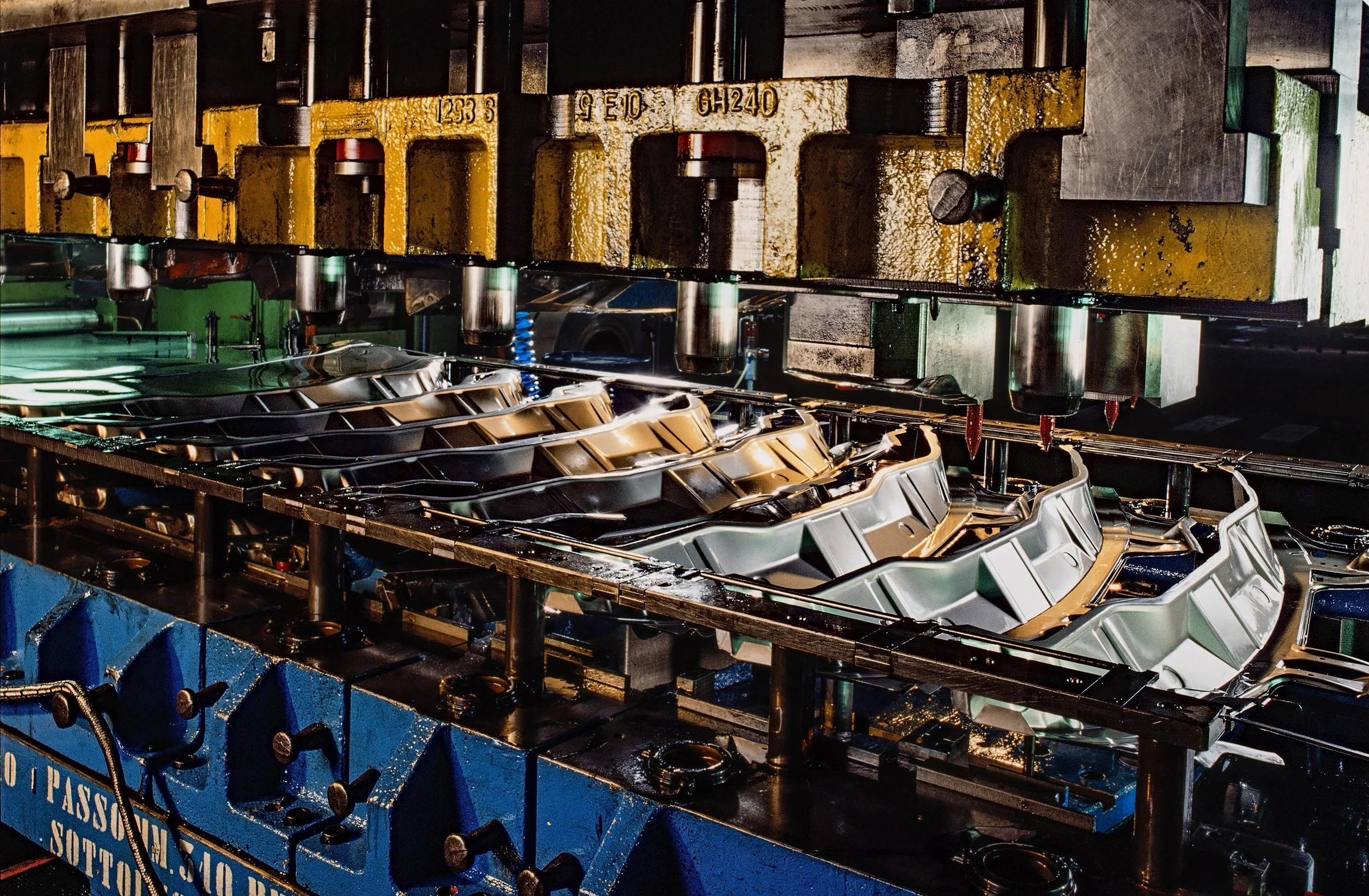
edge cracks
Cracks originating at the part edge during blanking or trimming operations. Often hairline width and difficult to see at production speed. High risk of propagating under load in service.
material tearing
The material tears during the draw or form operation when the deformation exceeds the material's forming limit. Immediately visible but easily missed at high production speeds without automated inspection.
wrinkles
Compressive instability during forming creates buckling in the part surface. May be subtle enough to pass visual inspection but will cause fit and function issues in assembly.
material thinning
Excessive stretching reduces wall thickness below specification in drawn areas. Not visible to the naked eye but detectable by AI vision trained on the subtle surface appearance changes associated with thinning.
die marks & scoring
Surface marks left by die wear, contamination, or improper lubrication. An early indicator of die maintenance needs — catching them early prevents a minor die issue from becoming a major scrap event.
burrs
Sharp raised edges left along cut surfaces when the die clearance is incorrect or the die is worn. Cause assembly interference, injury risk, and surface damage to mating parts.
the detect-it solution
Press-side AI inspection — trained on your parts, running on your hardware
Detect-It trains a stamping inspection net from video of your actual press operation — capturing the specific defect types, materials, and surface conditions that appear in your environment. Net Builder requires no coding and no machine vision expertise — any operator or quality engineer can build a working inspection net from a short video in hours.
Net Runner deploys that net to a camera positioned at the press output and runs live detection on every part as it comes off the die. When a defect is detected the system generates an immediate alert, logs the part with a timestamped image, and can trigger a reject signal to your press control or MES system.
at-press detection
Catches defects the moment the part comes off the die — before it's stacked, binned, or moved to the next operation where discovery costs multiply.
die health monitoring
Consistent part quality changes — increasing die marks, gradual edge crack development — are early indicators of die wear. Detect-It catches the trend before it becomes a scrap event.
any camera, on premises
Runs on any off-the-shelf USB or IP camera and any NVIDIA GPU PC behind your firewall. No proprietary hardware, no cloud connection, no ongoing subscription.
adapts to your material
Trained on your specific material, surface finish, and die conditions — not a generic stamping model. More accurate on your parts than any off-the-shelf vision system.
what detect-it can detect
Don't see your specific stamping defect type listed? Send us a video of your press operation and we'll show you what Detect-It finds.
see it in action
see it on your stamped parts before you decide
Send us a video of your press operation and we'll build a real Detect-It net and show you exactly what it detects — at no cost, no obligation, results in 1–3 business days.